The World’s Largest Cities (Are No Longer the Ones You Think)
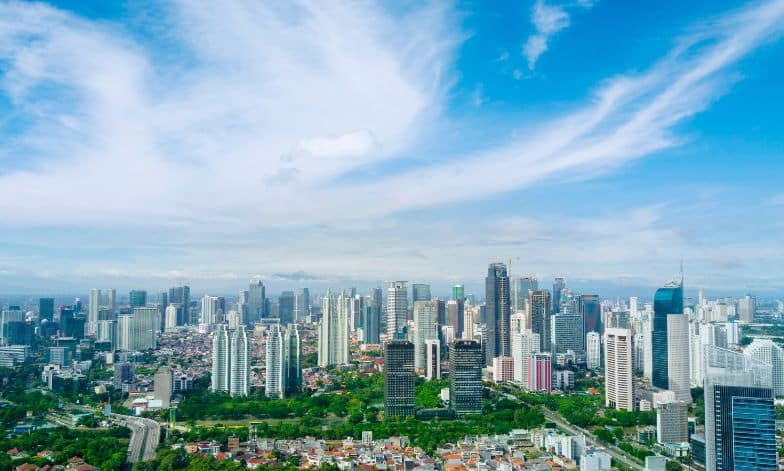
In 1975, there were just eight megacities, defined as cities with more than 10 million inhabitants, worldwide. Fifty years later, that number has risen to 33. Some capital cities have grown faster than others. For example, Tokyo, the world’s largest metropolitan area in 2000, has since been overtaken by Jakarta and Dhaka, the capitals of Indonesia and Bangladesh, respectively. The rankings have shifted in other ways as well. Mexico City and São Paulo have dropped out of the top ten largest cities, while Cairo and Shanghai have entered the list. The 10 largest cities in the world in 2000, 2025, and 2050 (millions of inhabitants) 2000 2025 2050 City Population City Population City Population Tokyo 30.3 Jakarta 41.9 Dhaka 52.1 Jakarta 25.6 Dhaka 36.6 Jakarta 51.8 Guangzhou 19.0 Tokyo 33.4 Shanghai 34.9 Seoul 19.0 New Delhi 30.2 New Delhi 33.9 Kolkata 18.4 Shanghai 29.6 Karachi 32.6 New Delhi 18.0 Guangzhou 27.6 Cairo 32.4 Manila 17.8 Cairo 25.6 Tokyo 30.7 Mexico City 17.6 Manila 24.7 Guangzhou 29.2 Dhaka 17.4 Kolkata 22.5 Manila 27.1 São Paulo 16.7 Seoul 22.5 Kolkata 23.8 By 2050, the world is expected to have four more megacities, driven by the growth of Addis Ababa (Ethiopia), Dar es Salaam (Tanzania), Hajipur (India), and Kuala Lumpur (Malaysia), according to the latest report from the United Nations Population Division on global urbanisation trends. Giant cities are proliferating in the Global South Of the world’s 33 megacities, 19 are in Asia and 27 are in the Global South. India has the largest number, with five megacities: New Delhi, Kolkata, Mumbai, Bengaluru and Chennai. China follows with four: Shanghai, Guangzhou, Beijing and Shenzhen. Shanghai, which had a population of 14 million in 2000, is projected to become the world’s third-largest city by 2050, with nearly 35 million residents. Africa’s largest cities today are Cairo (Egypt, 25.5 million), Lagos (Nigeria, 12.7 million), Luanda (Angola, 11.7 million) and Kinshasa (Democratic Republic of the Congo, 10.9 million). Luanda continues to experience spectacular growth. From just 715,000 residents in 2000, two years before the end of the country’s long civil war, its population grew to 11.4 million in 2025. By 2050, it is projected to double again, reaching 20.2 million residents. Several other African cities are also expected to approach the 10-million-resident threshold, including Alexandria (Egypt), Johannesburg (South Africa), Khartoum (Sudan) and Abidjan (Côte d’Ivoire). Latin America’s megacities are Mexico City (Mexico, 17.7 million), Buenos Aires (Argentina, 14 million), Bogotá (Colombia, 10.6 million) and Lima (Peru, 10.5 million). Their populations are not expected to change significantly by 2050. Europe has three cities with more than 10 million inhabitants Europe has just three metropolitan areas with more than 10 million inhabitants: Istanbul (15 million, the world’s 18th largest city), Moscow (14.5 million, 19th) and London (10.4 million, 33rd). In North America, only New York and Los Angeles exceed the 10-million mark, with populations of 13.9 million and 12.7 million, respectively. They rank 22nd and 27th among the world’s largest cities. Most of Europe’s major cities are not megacities and are not expected to become so. Istanbul, Moscow and London are each projected to add around 1 million residents by 2050. By contrast, Paris and Madrid are among the major cities whose populations have largely levelled off. By 2050, they are projected to remain close to their current sizes, at around 9.3 million and 5.5 million residents, respectively. Dhaka will be the world’s largest city by 2050 By 2050, Dhaka (Bangladesh) and Jakarta (Indonesia) are projected to be the world’s two largest cities, each with more than 50 million inhabitants following decades of rapid growth. Dhaka, the capital of a country with a population of 173 million in 2024, is experiencing one of the fastest rates of urban growth in the world, with between 300,000 and 500,000 rural migrants arriving each year. This expansion is largely driven by people displaced by climate-related impacts, including rising sea levels, riverbank erosion and soil salinization. The emergence of megacities on this scale will pose a significant challenge to achieving the Sustainable Development Goals (SDGs). Urban growth will be concentrated in just seven countries that already account for one third of the world’s population: Bangladesh, the Democratic Republic of the Congo, Egypt, Ethiopia, India, Nigeria and Pakistan are projected to add more than 500 million urban residents by 2050. Together, they will account for more than half of the projected increase in the global urban population.